
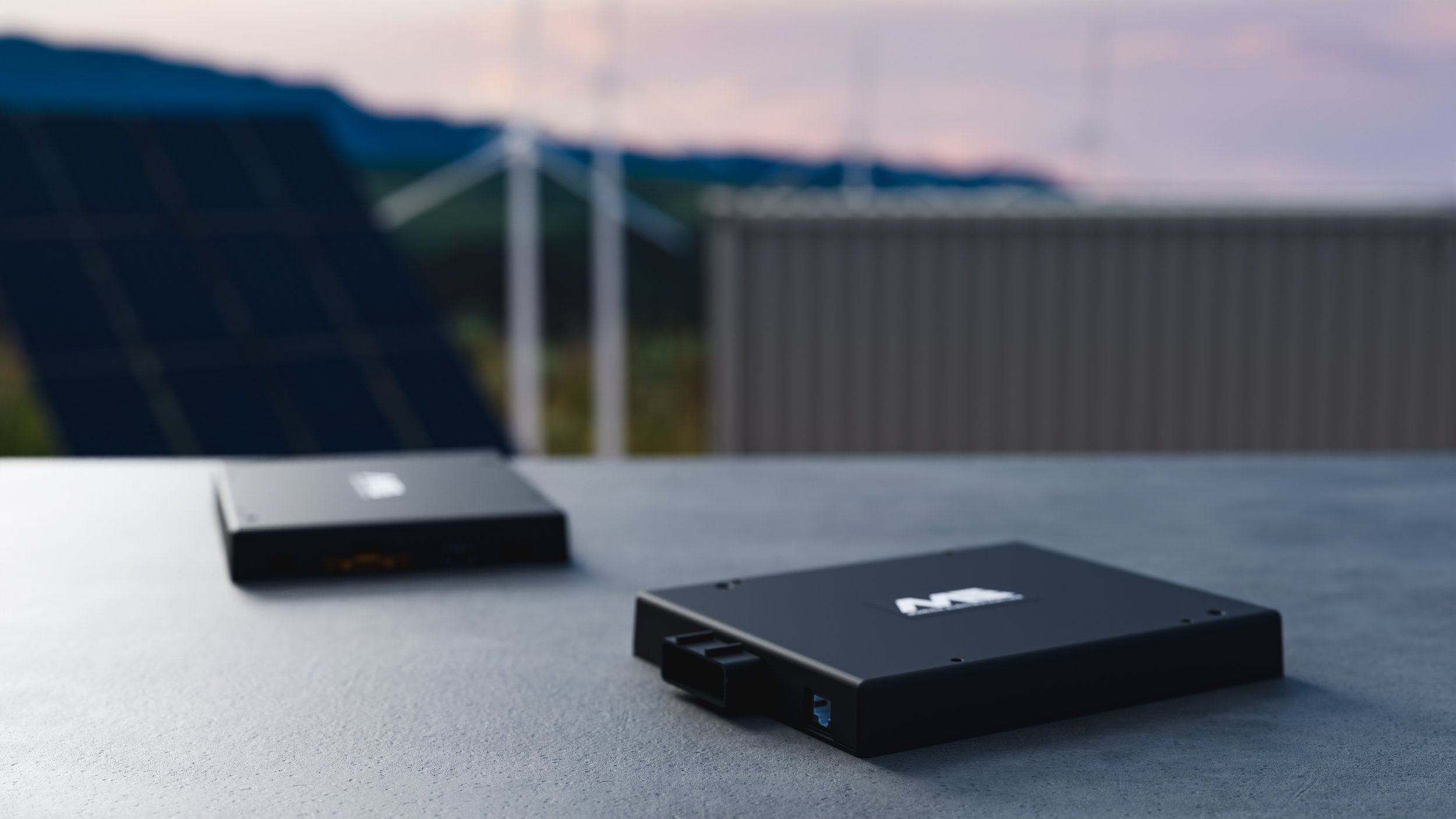
STATIONARY ESS BATTERY MANAGEMENT SYSTEMS
Discover unparalleled control and efficiency with our Stationary Battery Management System.
Streamline energy storage, optimize performance, and ensure reliability for a smarter future.
BMS FOR STATIONARY STORAGE SYSTEMS UP TO 1500 V
Munich Electrification offers battery management systems for stationary energy storage. Specifically for that application, we have adopted the SBS and CMB for ESS applications.

The Highlights:
High Voltage Interface for up to 1500 VDC
SoC, SoH and balancing algorithms are optimized for stationary use case
Safety certification (ISO26262 or ISO13849)
Cyber security conformity for UL5500 (UL9540 compatible)
CAN and Ethernet interface available
A telematic control unit is offered as a companion product for the BMS for remote monitoring and controls
UL1973 and IEC 62619 compatible
Third level (container controller) possible by ME

PRODUCT FLYER STATIONARY STORAGE SYSTEMS

CMB-
CELL MONITORING BOARDS
Munich Electrification offers a variety of CMB solutions. While 64 channel versions are available off-the-shelf, ME benefits our customers by creating highly integrated customized CMB versions specifically optimized for each application.


THE HIGHLIGHTS IN A NUTSHELL:
High cell voltage measurement accuracy
Precise cell temperature input measurement channels
Innovative additional sensors for thermal event detection
Compact design with integration features ranging from flex circuit interface to fully cell-module integrated CMBs
Functional Safety levels up to ASIL D in combination with the SBS
Various cell voltage measurement channel counts possible
Utilization of advanced cell monitoring chipset technology

PRODUCT FLYER CMB
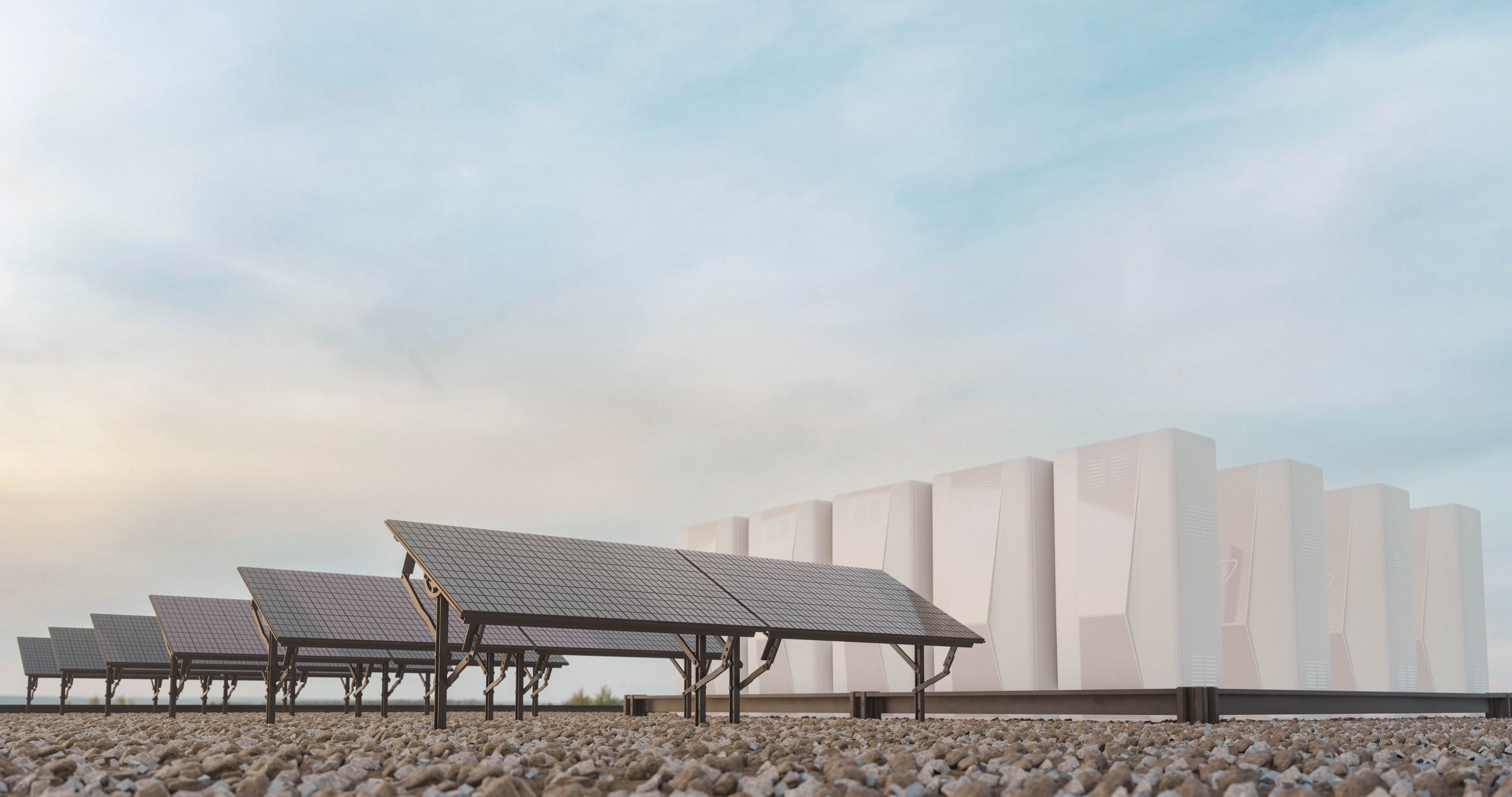
QUESTIONS ABOUT BESS, ANSWERED.
-
More than just a battery: BESS is short for Battery Energy Storage System. It means storing electricity in batteries so you can use it later, like saving energy when demand is low and using it when demand is high. While the acronym itself is simple, the technology it represents is a sophisticated convergence of electrochemistry, power electronics, thermal engineering, and software intelligence. It is not merely a "big battery" in a box; it is a dynamic, integrated system designed to capture energy at one time for use at another.
Imagine a swimming pool. And now, imagine electricity as water:
The water (energy, coming from Grid/Solar Panels) is filling the pool. But solar panels are like a rainstorm - sometimes it pours (sunny midday), sometimes it drizzles (cloudy), and sometimes it stops completely (night).
The Battery (Energy Capacity - kWh/MWh): This is the swimming pool itself. The size of the pool determines how much water you can store. A larger pool (more MWh) means you can store more energy to use when the "rain" stops.
Then you need a pipe or hose to drain the pool when you need water. This is the Inverter/Power System (Power Capacity - kW/MW). A massive fire hose (high MW rating) can empty the pool very quickly for example to put out a fire (meet a sudden spike in demand), while a small garden hose (low MW rating) releases water slowly over a long time.
When you fill the pool, you are "charging." When you open the drain to water your garden, you are "discharging". A BESS allows you to capture the "rain" (f.e. solar energy) when it is falling and save it for a dry spell (nighttime). Without the pool, that rainwater would simply run off and be wasted. -
The urgency behind BESS adoption is driven by the global shift toward renewable energy. Solar and wind are "intermittent" resources; the sun doesn't always shine, and the wind doesn't always blow. Ideally, we could store solar and wind power to use later. BESS can do exactly that: they balance out fluctuations in energy production. With battery storage systems, we can partly replace coal or gas power plants, which is much better for the environment.
The Intermittency Problem: If a cloud passes over a solar farm, power output drops instantly.
Without storage, the lights would flicker or fossil-fuel plants would have to ramp up aggressively to compensate.
BESS acts as a shock absorber, smoothing out these bumps.
Grid Stability: As heavy rotating generators are retired, the grid loses "inertia"—its ability to resist changes. BESS, through advanced electronics, can synthetically replace this stability, reacting in milliseconds to keep the grid's "heartbeat" (frequency) steady at 60Hz or 50Hz.
Decarbonization Goals: Achieving "Net Zero" is physically impossible without massive storage capacity to bridge the gap between renewable generation peaks and demand peaks.
ADVANTAGES:
- Capture excess energy: Solar and wind sometimes produce more than needed. BESS stores the surplus for later.
- Backup during outages: Useful for hospitals, data centers, traffic systems.
- Cost savings: Charge when electricity is cheap, use when prices rise. -
A Battery Energy Storage System is akin to a living organism. It has a body (batteries), a circulatory system (thermal management), a nervous system (BMS), and a brain (EMS). Understanding how these parts interact is key to grasping the system's complexity.
The Storage Medium: Battery Modules
The heart of the system is the battery cell. While various chemistries exist, Lithium-ion (Li-ion) is currently the dominant technology, leveraging the massive scale of the electric vehicle (EV) industry to drive down costs.From Cell to Container:
to build a utility-scale system, engineers follow a hierarchical assembly process:Cell: The base unit (e.g., a cylindrical cell or prismatic pouch).
Module: A group of cells wired together and encased in a protective frame. The module usually contains the first layer of sensors.
Rack: Multiple modules stacked vertically in a cabinet. Racks are connected in series to build up high voltage (e.g., 800V - 1500V DC).
Container: Racks are installed into a shipping container or custom enclosure, which also houses the cooling and fire suppression systems.
A simple example how the system works:
Daytime (solar surplus): The sun is shining at noon. Solar panels produce a lot of energy. The Battery charges like a big power-bank, using solar power.
Evening (high demand): In the evening, when people are coming home from work, using light, etc., a lot of energy is needed. After 8 p.m. the sun is setting and there's no wind to turn the wind turbines. Now the battery discharges stored energy into the grid.
-
A common point of confusion—even for industry professionals—is the difference between the Battery Management System (BMS) and the Energy Management System (EMS). While both involve software and control, their roles are distinct and complementary. Think of them as the "Guardian" and the "Brain".
The BMS: The Guardian (Internal Focus)
The BMS is the system's autonomic nervous system. It operates at the micro-level, looking inward at the battery cells. Its primary directive is safety and preservation.
Core Responsibilities:
Safety Monitoring: It constantly checks the voltage, current, and temperature of every cell. If a cell gets too hot or goes over-voltage, the BMS intervenes immediately (milliseconds) to disconnect the circuit. It is the "kill switch" for safety.
State of Charge (SoC) Calculation: You can't see inside a battery to know how full it is. The BMS uses algorithms to estimate the remaining energy (SoC) based on voltage and current history.
Cell Balancing: Cells in a pack aren't perfectly identical. Some fill up faster than others. The BMS "balances" them by bleeding off energy from the high cells so the low cells can catch up. This ensures the pack is filled to its maximum capacity.
The BMS is like your body's subconscious. It regulates your heartbeat and body temperature. You don't have to think about it; it just protects you and keeps you alive.
The EMS: The Brain (External Focus)
The EMS is the system's executive CEO. It operates at the macro-level, looking outward at the grid, the market, and the user's needs. Its primary directive is economic optimization and performance.
Core Responsibilities:
Dispatch Strategy: The EMS decides when to charge and discharge. It looks at electricity prices, solar forecasts, and historical load data to make smart decisions. "Prices are high right now? Let's discharge and make money.".
System Coordination: It acts as the conductor, telling the PCS (inverter) how much power to convert and checking with the BMS to make sure the battery allows it.
Data Reporting: It collects data from the whole system to show the owner how much money they saved or how much renewable energy they used.
The EMS is your conscious brain. It makes plans ("I need to walk to the store") and strategic choices. It relies on the BMS (body) to actually execute the movement safely.
-
In a typical operation:
The EMS sees that electricity prices have spiked. It decides to discharge 1MW of power to sell to the grid.
The EMS sends a request to the system: "Discharge at 1MW."
The BMS analyzes the battery's state. It sees that the battery is at 50% charge and the temperature is normal. It "approves" the request.
The PCS draws DC power, converts it to AC, and sends it to the grid.
Scenario Twist: If the battery were overheating, the BMS would reject the request or limit the power to 0.5MW to protect the cells. The Guardian (BMS) always overrules the Brain (EMS) when safety is at risk.
-
Understanding the components is one thing; seeing them in action is another. BESS operation is defined by "cycles," the continuous process of charging and discharging.The Charge-Discharge Cycle
Charging: The PCS draws AC power from the grid, which it converts (rectifies) to DC. The BMS constantly monitors the cells as they are filled, ensuring they do not exceed their maximum voltage (e.g., 4.2V for NMC Li-ion). As the battery approaches a full state, the charging rate automatically slows down (Constant Voltage phase) to top it off gently.
Discharging: When power is required, the process reverses. The BMS monitors the voltage during discharge to prevent it from dropping too low, which would cause permanent chemical damage. The DC power flows to the PCS, which converts it back to AC power for the load.Different Application Profiles
Different applications require different "profiles":
Energy Arbitrage (The Daily Cycle): This is the most common profile for solar storage. The battery charges for 4-6 hours during the day (solar peak) and discharges for 4 hours in the evening. This is a "deep cycle," using perhaps 80% or 90% of the battery's capacity once per day.
Frequency Regulation (The Sprinter): Here, the battery makes tiny adjustments constantly—charging for 30 seconds, discharging for 30 seconds—to keep the grid frequency stable. The battery might never fully charge or discharge; it hovers around 50% SoC, acting like a shock absorber. This puts less thermal stress on the battery but requires high-speed control.
Self-Discharge and Efficiency:
Round-Trip Efficiency (RTE): If you put 100 kWh into a battery, you might only get 85-90 kWh back out. The lost energy is converted to heat by the internal resistance of the cells and the inefficiency of the inverter. Li-ion BESS typically has a high RTE (85-95%), much better than hydrogen storage (30-40%) or pumped hydro (70-80%).
Self-Discharge: Even when sitting idle, a battery loses a tiny amount of energy. For Li-ion, this is very low (1-2% per month), but it is a factor for long-term storage planning.
-
Safety is the elephant in the room. While BESS technology is generally safe, the high energy density of Li-ion batteries means failures can be dramatic. Batteries are like Goldilocks, they hate being too hot or too cold.
The Thermal Management System (HVAC)
Heat Generation:
Charging and discharging generate heat due to internal resistance. If this heat isn't removed, the battery degrades faster or, in extreme cases, catches fire.Cooling Solutions:
Air Cooling: Fans blow conditioned air through the racks. This is simple but less efficient for high-power applications.
Liquid Cooling: A coolant fluid (glycol/water mix) circulates through plates sandwiched between battery cells. This is increasingly common in modern high-density systems as it maintains very uniform temperatures, extending battery life.
Safety Systems: Fire SuppressionGiven the energy density of Li-ion batteries, fire risk is a critical consideration. BESS containers are equipped with multi-stage safety systems.
Detection: Sensors monitor for smoke, heat, and increasingly, off-gases (like hydrogen) that are released before a fire actually starts.
Suppression: If a threat is detected, systems release suppression agents (like Novec 1230 or aerosols) to suppress combustion.
Containment: The physical structure is designed to contain a fire if it occurs, preventing it from spreading to neighboring units.
Mitigation and Safety StandardsThe industry has developed rigorous standards, such as NFPA 855, to manage these risks.
LFP Chemistry: The shift toward Lithium Iron Phosphate (LFP) chemistry is largely safety-driven. LFP has a much higher thermal runaway temperature and releases less heat than Nickel Manganese Cobalt (NMC) chemistries.
Off-Gas Detection: Modern systems use sensors to "smell" the electrolyte gases released before thermal runaway begins, allowing the system to shut down preemptively.
Deflagration Venting: Containers are equipped with blast panels (vents) on the roof or walls. If gases build up and ignite, the panels blow open to release the pressure safely, preventing the container from exploding like a bomb.
Spacing: BESS sites are designed with specific spacing between containers to ensure that if one unit burns, it doesn't ignite the next one.
-
xyz
-
Item description
GET IN TOUCH
If you would like to know more about these products, feel free to contact us.